EMO
What we feel.
EMOCAPITALIST began as a word. Then it started behaving like culture: images, garments, labels, rituals and a shop that refuses to complete the purchase.
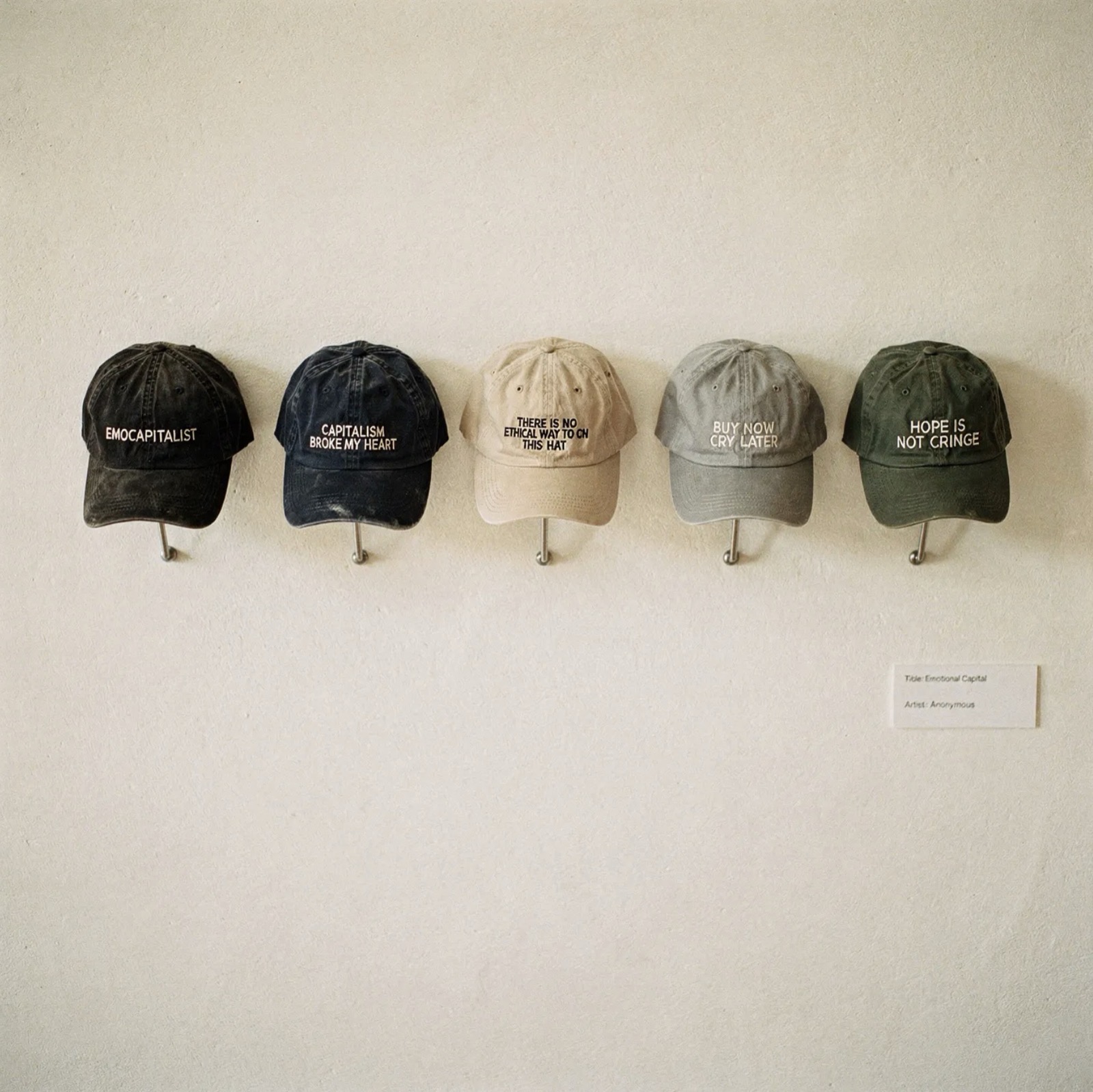
Emocapitalist began as a proposal for Lara Favaretto's Prospective Lexicon, a project dedicated to inventing new words for experiences that are emerging but not yet fully named.
The word joins two forces that should not sit comfortably together: EMO, what we feel, and CAPITALIST, the system we remain materially inside.
Someone who recognises the contradiction, feels it deeply, and continues anyway.
In its shortest form: one who knows and continues. But a word is not culture. A word is only a possibility looking for a body.
What we feel.
Where we remain.
The project starts from a simple question: what happens when a word tries to gain cultural recognition?
How does a private tension become visible, shareable and collectively legible? How does it gain form? How does it gain scale? How does it become something people can point to and say: yes, that.
EMOCAPITALIST does not try to answer these questions theoretically. It tests them through the same mechanisms culture already uses: art, fashion, objects, institutions, brands and circulation.
The silence of contradiction.
Emocapitalist.
Recognition through signs.
A feeling finds its infrastructure.
The portraits imagine the face of EMOCAPITALIST. At first glance, they behave like traditional paintings. In practice, they are AI-generated images printed on canvas.
They seek legitimacy through a form whose authenticity remains disputed. The work reproduces the same tension it tries to represent.
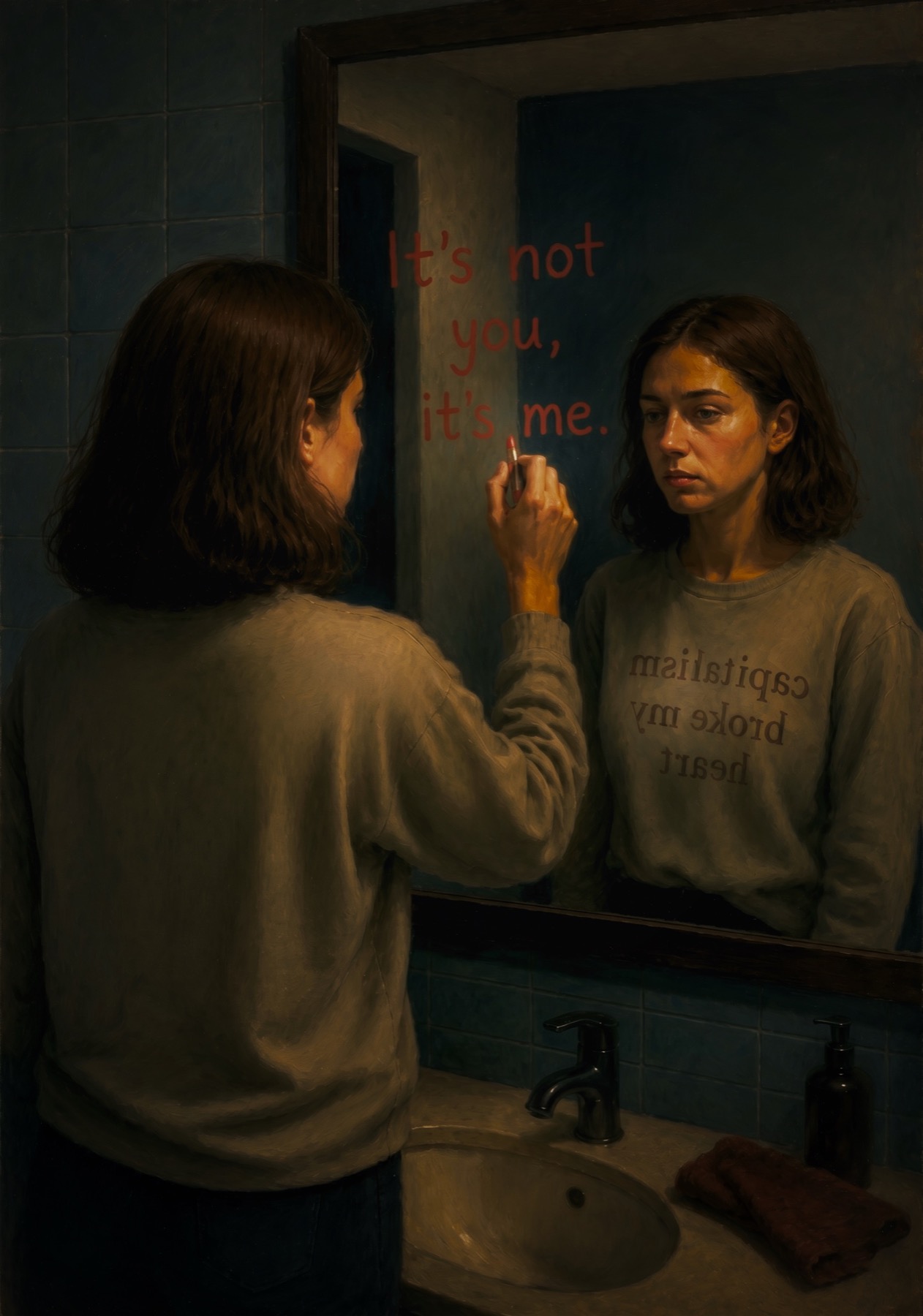
A breakup letter addressed to a system she cannot leave.
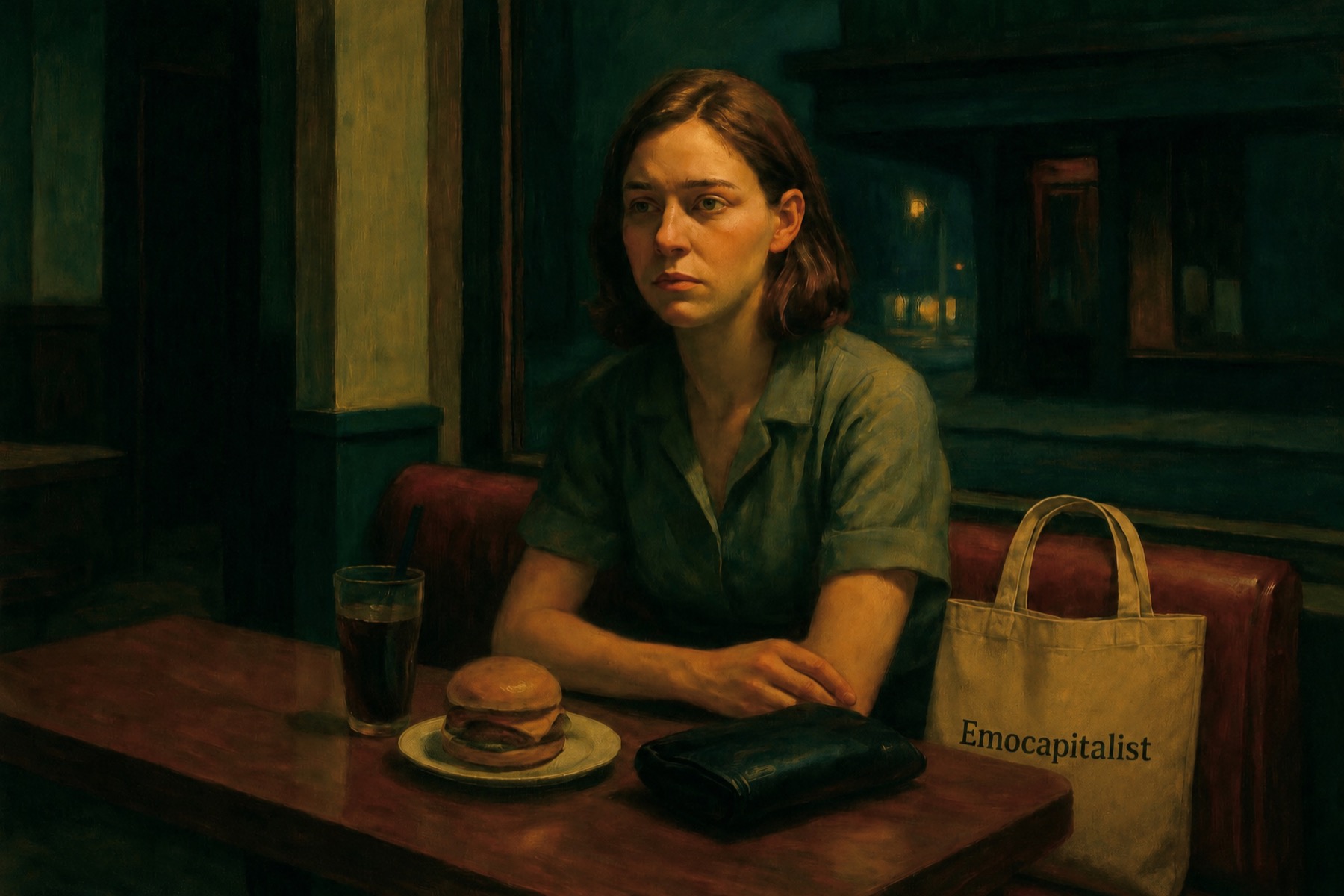
A portrait of contradiction: aware of the consequences, yet still consuming.

Someone understands the contradiction and remains inside it.
Caps, slogans and artefacts function as signs of identification: traces of a community that does not fully exist yet, but can already recognise itself.
They transform individual recognition into collective recognition. They also expose the problem: belonging is mediated by consumption. Very convenient. Very suspicious.
Through a conceptual online store, EMOCAPITALIST temporarily assumes the form of a brand. It uses the grammar of contemporary ecommerce: product pages, prices, sizes, materials, shipping, returns and customer care.
At checkout, the transaction stops. The visitor is told: You cannot buy your way out of this feeling.
The system of circulation exists. The resolution does not.
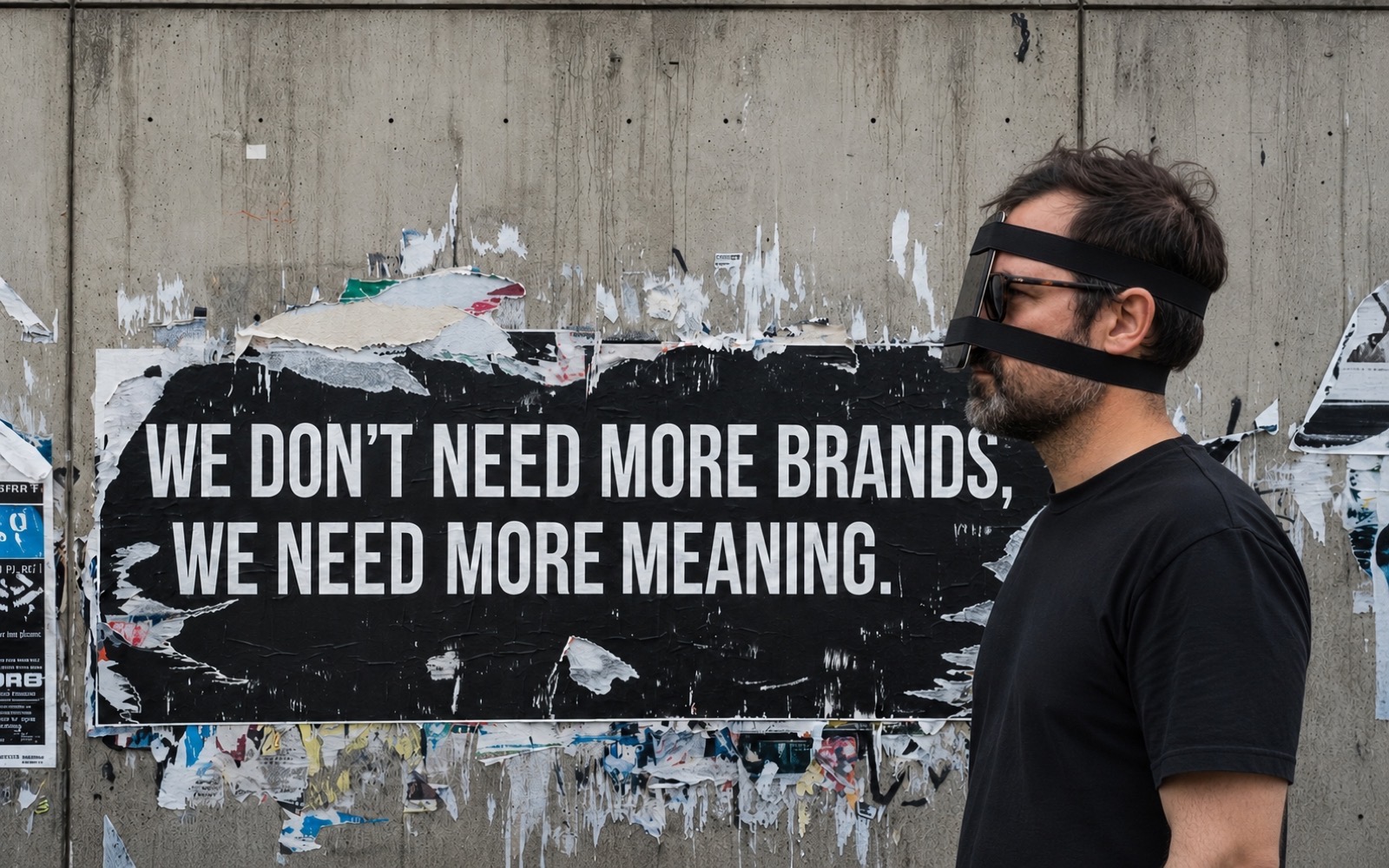
Miguel Melo is a strategic designer and brand thinker whose practice explores the edges of possibility, using speculative thinking to reframe how we relate to brands, systems and futures.
Bridging industrial design, strategic branding and business innovation, he works between cultural insight, narrative speculation and systemic design to imagine new forms of meaning.
His approach treats brands not only as commercial artefacts, but as cultural infrastructures: capable of shaping perceptions, behaviours and possible futures.